
We regularly interact with steel products throughout everyday life. Even though this is the case, most of us have no idea how steel is made. But, if you need to buy steel, it’s important to understand what you’re purchasing and the type of steel you need for your purposes. For example if you’re a cargo trailer manufacturer, you may need diamond plate steel for the flooring of the trailer to provide extra traction.
This blog will provide a brief overview of how steel is made and the different types of steel products available.
How Is Steel Made Step By Step?
Making steel is a lengthy process that requires manufacturers to first create iron and pure steel, then grade it and refine it. This has undergone improvements over time and thoroughout history, and the current state of the steel industry in America deploys advanced technology. However, let’s talk about the “constants” that remain the same.
Here is a simplified overview of how to make steel in 6 steps:
- Make the iron: You first need to make iron to make crude steel. This involves mixing lime, coking coal turned into coke, and iron ore into a blast furnace to be melted down into molten iron or hot metal. The iron will still have impurities, like nitrogen and phosphorus, which will be removed in the later stages.
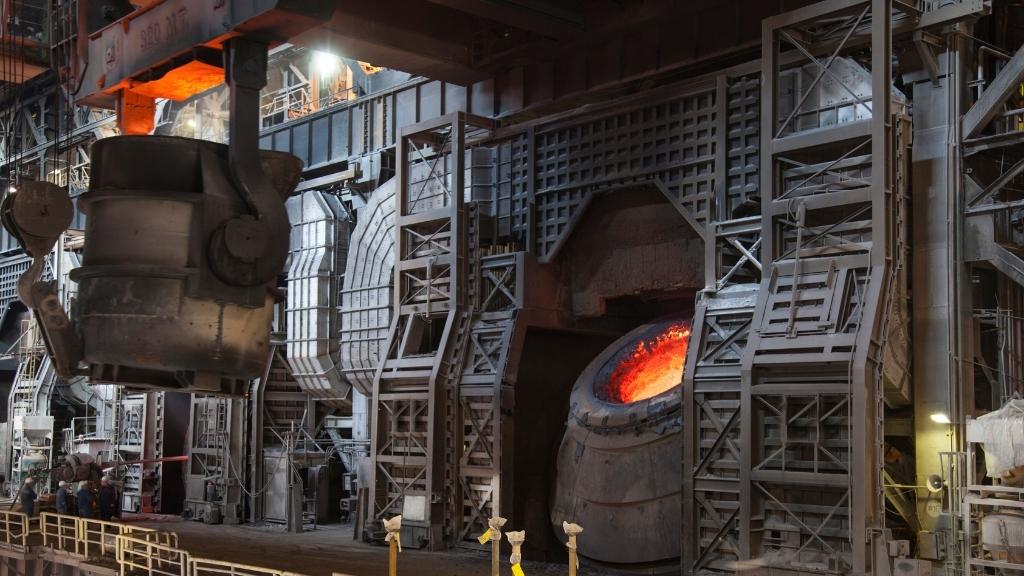
- Primary steelmaking: To make primary steel, you infuse the molten iron metal with scrap steel. This is when the furnace forces oxygen through the molten metal to remove many of the carbon and other impurities. Electric furnaces will also work here, but they will force electricity through the furnace rather than oxygen.
- Secondary steelmaking, After we have raw steel, we can make secondary steel which is essentially graded steel for different tasks. Grades are based on the elements that are still in the metal. To create drawing quality steel, you replace the carbon with aluminum. To create structural steel, the raw material needs to hold on to more of the carbon. Stirring, raising/lowering the temperature, removing gases, and ladle injection can all be used to make different grades.
- Continual casting: Once you’ve got the right grade, you begin continuous casting. This requires steel to be in its molten steel form and then it is cast into cooling molds. This will allow the steel to harden. The molds draw it out and pull it out with rollers so that it can be formed and cut to length. Here is where most beams, billets, and slabs are created.
- Primary forging: Once the casting is done, it is then sent off for primary forging, which is where the roughly cast items are shaped better through hot rolling. This removes defects and creates the ultimately desired steel quality and shape. This process usually makes seamless tubing, long flat metal products, and other items.
- Secondary forming: Finally we have secondary forming. This is where the final shape is set and secondary techniques finish the product. The product may go through coating, thermal treating, joining to make I beams, pressing, drilling, machining, and riveting.
Watch this video to see the steel making process in action:
What is the Process of Steelmaking?
What is Steel Made Out Of?
Steel is made out of alloy products, pig iron or iron ore and carbon, and usually contains up to 2% of carbon content which is moved through the refining process. Steel with a higher carbon content is called cast iron.
Other alloying elements like manganese, chromium, copper, nickel, titanium, molybdenum, tungsten, and vanadium can also be added to make steel.
How Does Iron Turn Into Steel?
Steel cannot be found in nature; it must be turned into its final product through a lengthy process called steel manufacturing. The two most common processes of making steel are blast furnace/basic oxygen furnace route and electric arc furnace route.
In these processes, the iron ore and other materials are melted down and then pressed and pulled into steel. After further forging, steel can be turned into other types of steel products.
Is Steel Stronger Than Iron?
Steel is stronger than iron in yield and ultimate tensile strength, which is why steel production is more common than iron manufacturing. It is tougher than many iron types (measured as fracture toughness) with less than 0.5% of carbon by weight.
Different Types of Steel Products and Their Uses
While the process to turn iron into steel is relatively the same, you can still make different steel products in steps 3 through 6, when the steel is made into secondary steel, cast, and has gone through primary and secondary forging.
However, in general, there are 4 different types of steel commonly made during steel production:
- Carbon steel: Carbon steel is dull and matte-like and the steel most likely to corrode. You can have low (.30%), medium (.60%), and high (1.5%) carbon steel, which contains more or less carbon. Carbon steel is exceptionally strong, often containing very small amounts of other alloying elements too. It is often used to make knives, high-tension wires, angle iron, rebar, and automotive parts. Carbon steel makes up roughly 90% of all steel production. See this post to explore how steel conducts heat.
- Alloy steel: Alloy steel is often a mixture of different metals like copper, aluminum, and nickel. Alloy steel is often cheaper and more resistant to corrosion, which is why it is used to produce pipelines, ship hulls, and some car parts exposed to the elements. The strength of this product depends on the concentration of elements. Alloy steel has high core strength and toughness. It can make heavy-duty bearings, cam followers, clutch dogs, compressor colts, fan shafts, heavy-duty gears, and pump shafts.
- Tool steel: Tool steel is hard and resistant to scrapes and heat. This steel is obviously named for being used in metal tools, like hammers. It is also made up of cobalt, molybdenum, and tungsten, which is why it often comes with high durability and resistance features.
- Stainless steel: Finally, there is stainless steel. This is the most well-known type of steel on the market. It’s shiny and has up to 10 or 20% of chromium, as its main alloying element. With the added chromium, stainless steel is resistant to corrosion and can easily mold into shapes. Because it can be easily manipulated and is flexible while remaining of high quality, stainless steel is used in surgical equipment, home appliances, silverware, and even in the exterior cladding for industrial buildings. There are over 100 types of stainless steel and it is truly customizable. You’ll use stainless steel 316L, for example, to create heat exchangers, pipelines, materials for exterior construction in coastal areas, and for equipment for use in marine, chemicals, dyes, and the food industry.
A steel mill might also make a byproduct called slag. Slag is usually a mixture of metal oxides and silicon dioxide and often contains metal sulfides and elemental metals. Slag can be ferrous, ferroalloy, and non-ferrous and can be melted down to minimize iron loss, which gives out a significant amount of iron, calcium, silicon, magnesium, and aluminum. Slag is used in granular bases, highway shoulders, engineered fill, embankments, and hot mix asphalt pavement.
Scrap or recycled steel is also common in the steel industry, as steel is one of the most recyclable products on the planet.
Buying Steel in McKinney Texas
When it comes to buying metal products in McKinney Texas, you want to purchase from a reliable metal supplier. At Vitz Metals, we provide a wide range of steel products in the Dallas, Fort Worth area, including:
- Angle iron/steel lintels
- Diamond plate steel
- Expanded metal mesh
- Rebar
- Steel channel
- Steel I beams
- Steel pipes
- Steel purlins
- Steel square tubing
Call to ask about product availability, or drop in. We’d love to provide you with the steel you need.